


Project Progress
The Carrizo Pumped Storage Hydropower project is advancing through a coordinated program of engineering, environmental, grid, market, water-resource, and community studies. The work is organized into 14 major tasks that collectively evaluate the technical feasibility, economic value, environmental considerations, and community benefits of the proposed project.
Stakeholder Advisory Committee
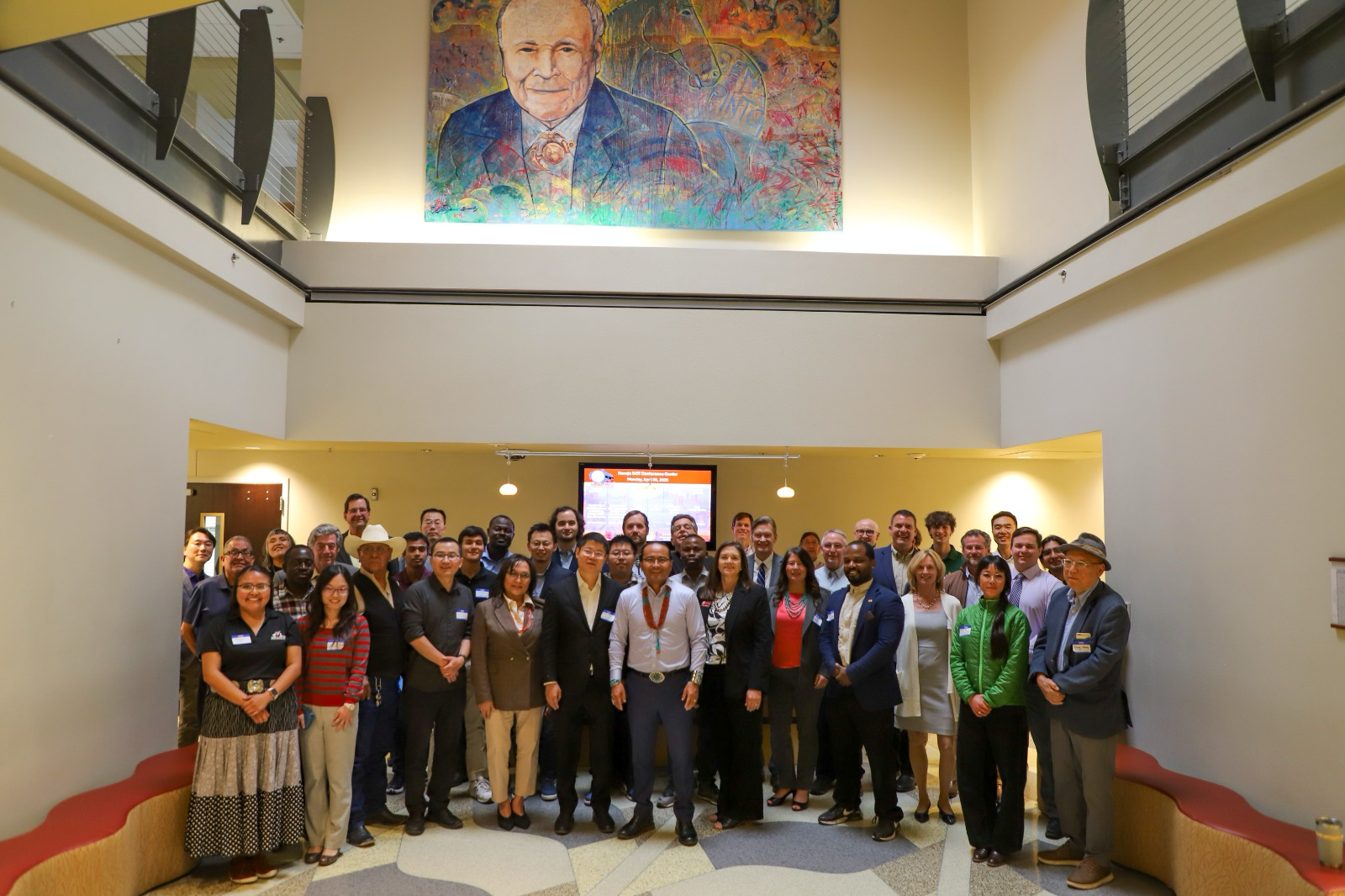
The project team is establishing a Stakeholder Advisory Committee to provide input throughout the study. The committee is intended to bring together perspectives from the Navajo Nation, local communities, utilities, government agencies, national laboratories, universities, and industry. A draft committee charter has been developed to guide participation, meetings, responsibilities, and the review of project activities.
Preliminary Geotechnical Site Investigation
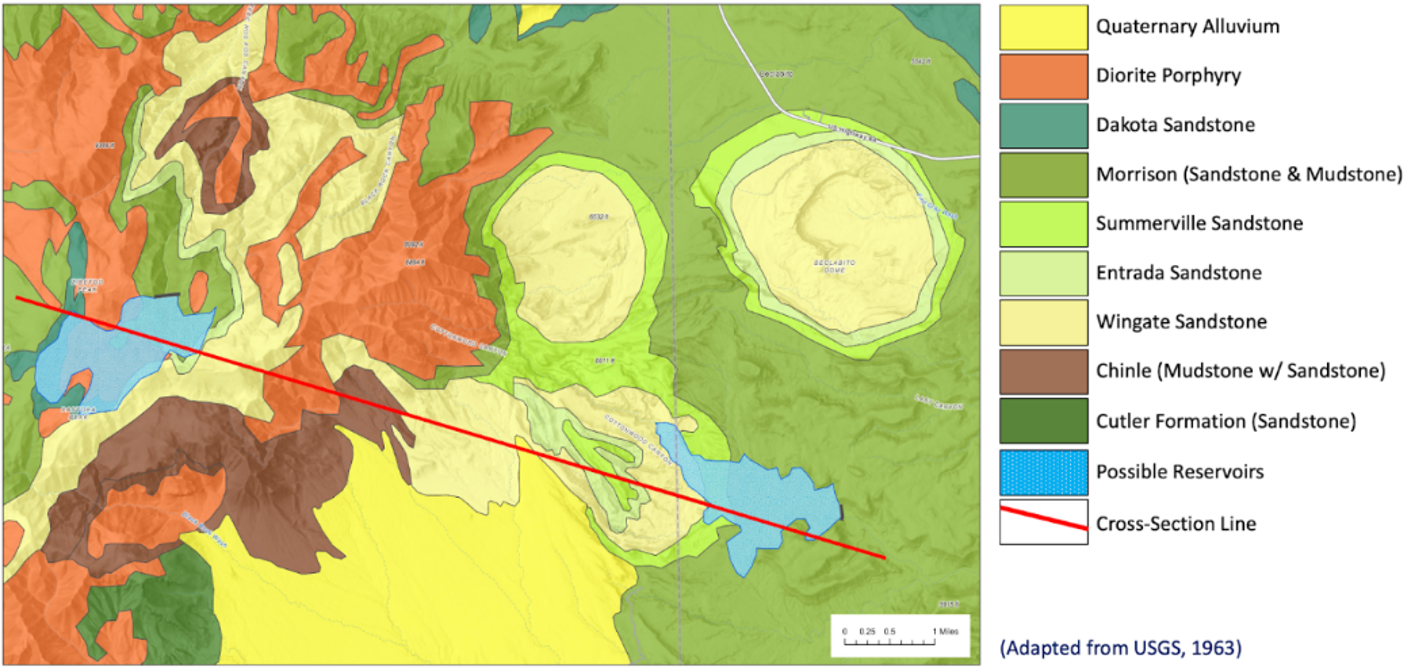
The team completed a two-week field investigation at the Carrizo site near the proposed upper and lower reservoir areas. The field program included geological mapping, rock-mass characterization, Schmidt hammer testing, discontinuity measurements, infiltration testing, and collection of rock samples for laboratory analysis.
Field observations have been incorporated into an updated preliminary geological map, and preliminary geological cross-sections are being developed. The team also prepared a detailed seismic survey plan for the upper portion of the project alignment and completed an RFP to support additional subsurface investigation.
An initial workflow has also been established for developing a three-dimensional geological model using field observations, future seismic survey results, borehole information, and laboratory data. Seven potential drilling locations have been identified to support future geotechnical investigations.
Reservoir and Dam Assessment
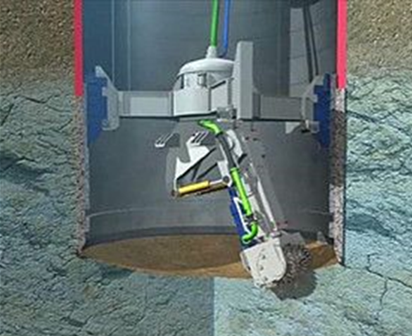
The project team has completed preliminary evaluations of tunnel and shaft configurations, including tunnel diameters, access requirements, lining concepts, construction methods, and preliminary cost estimates.
A preliminary tunnel cost model has been developed for a baseline alignment. The team has also initiated an AI-assisted planning tool to compare tunnel and cavern construction alternatives using factors such as excavation rate, construction cycle time, material requirements, schedule, and constructability.
Tunneling and Excavation Planning
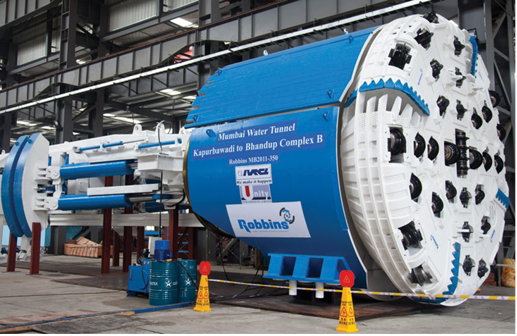
The project team has completed preliminary evaluations of tunnel and shaft configurations, including tunnel diameters, access requirements, lining concepts, construction methods, and preliminary cost estimates.
A preliminary tunnel cost model has been developed for a baseline alignment. The team has also initiated an AI-assisted planning tool to compare tunnel and cavern construction alternatives using factors such as excavation rate, construction cycle time, material requirements, schedule, and constructability.
Powerhouse and Hydraulic Engineering
Preliminary engineering is underway for the underground powerhouse and hydraulic systems.
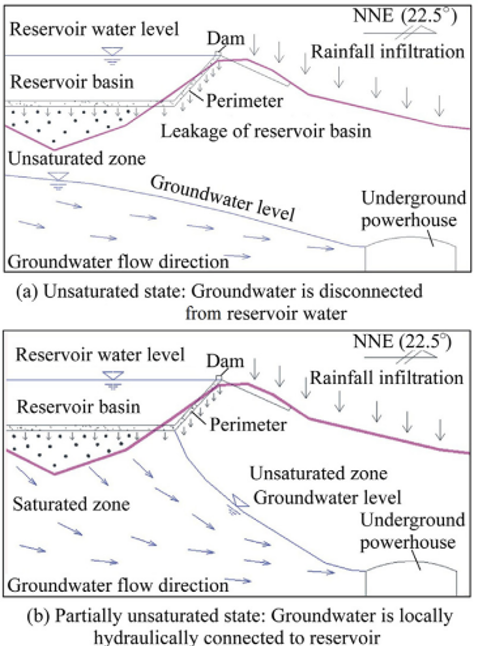
The team has evaluated initial turbine configurations, powerhouse dimensions, and potential equipment layouts. Studies are also examining water-conveyance dynamics, including pressure changes that can occur during plant operation, and the potential need for surge-control facilities. These analyses will help refine the design of the powerhouse, tunnels, shafts, and associated hydraulic infrastructure.
Environmental Permitting and Interconnection Studies
Environmental and permitting activities are progressing in coordination with the Navajo Nation and relevant agencies.
The project is evaluating environmental considerations associated with wildlife, vegetation, water resources, cultural resources, land use, threatened and endangered species, and other resources that may be affected by future project development. Permitting activities are also supporting upcoming geological, environmental, and drone-based field investigations.
Transmission Benefits
The project is studying how Carrizo Pumped Storage Hydropower could benefit the Western transmission system.
The production-cost modeling platform has been expanded to include nonlinear AC power flow, improving representation of transmission losses, voltages, reactive power, and congestion. A transmission reliability platform has also been upgraded and validated on power-system test cases ranging from 14 to 2,383 buses.
In addition, the transmission expansion model has been extended to jointly consider storage, generation, and transmission investments, providing the foundation for evaluating whether Carrizo PSH could reduce or defer future transmission investments.
Electricity Market Assessment
The project team has assembled and organized historical electricity-market, load, generation, renewable-energy, and transmission datasets needed for the market analysis.
A WECC economic-dispatch modeling framework integrating the California Independent System Operator and Western Energy Imbalance Market has been established. The model represents generation dispatch, transmission constraints, reserves, storage operation, and regional market interactions.
The team has also developed a prototype bidding model for Carrizo PSH that considers energy arbitrage and regulation services while accounting for the operating characteristics of long-duration pumped storage.
Reliability and Resilience Benefits
The project is developing methods to evaluate how Carrizo could improve power-system reliability and resilience during both routine operating conditions and major disruptive events.
Weather, power-system, and infrastructure datasets are being integrated to support analysis of extreme weather, outages, renewable variability, transmission congestion, and other grid conditions. This work will ultimately help quantify the economic value of reducing power interruptions and improving the ability of the Western grid to withstand and recover from major disturbances.
Renewable Energy Integration
The project is evaluating how long-duration pumped storage can support increasing levels of wind and solar generation across the Western Interconnection.
The team has developed coupled wind, solar, and electricity-demand scenarios that capture geographic and temporal variability, including extreme-weather conditions. These scenarios will be used to evaluate how Carrizo could reduce renewable-energy curtailment, manage periods of low renewable production, and provide greater flexibility as renewable generation continues to expand.
Water Supply, Usage, and Management
The project team is studying long-term water availability and drought risk in the San Juan River basin.
Historical and modeled precipitation, evaporation, drought, and hydrologic information have been assembled to characterize seasonal and long-term water conditions. Initial analyses show the importance of evaporation and drought during the warmer months, and the team has developed preliminary stochastic climate scenarios to evaluate a broad range of future hydrologic conditions.
This work will support future evaluation of reservoir operation, water availability, water quality, and long-term project resilience.
Greenhouse Gas Emissions
The project will evaluate how operation of Carrizo Pumped Storage Hydropower could affect greenhouse gas emissions across the Western power system.
The team is establishing the power-system, renewable-energy, market, and emissions datasets needed to compare system operation with and without Carrizo. Future analyses will examine how long-duration storage can support renewable energy while affecting the operation of conventional generation and overall system emissions.
Drone Survey and Digital Twin Development
The project is using advanced drone technology to support high-resolution mapping and environmental assessment of the project area.
Following an evaluation of several aircraft, the Trinity Pro drone was selected for the project. The team has completed operator training and a successful test flight and has evaluated several camera, LiDAR, and multispectral sensor options.
Detailed flight planning, ground-control procedures, and data-processing workflows have also been developed. The information collected through future surveys will support high-resolution 3D mapping, engineering analysis, environmental assessment, and development of digital-twin and visualization tools.
Community Benefits and Engagement
Engagement with the Navajo Nation is a central component of the Carrizo project.
The project team is coordinating with Navajo Nation representatives on project development, permitting, environmental studies, and future community benefits. Planned activities include assessment of infrastructure and renewable-energy benefits, workforce development, educational outreach, and opportunities for local participation.
Public-facing project websites have also been established to share project information, technical progress, permitting information, and community updates with stakeholders and the public.